


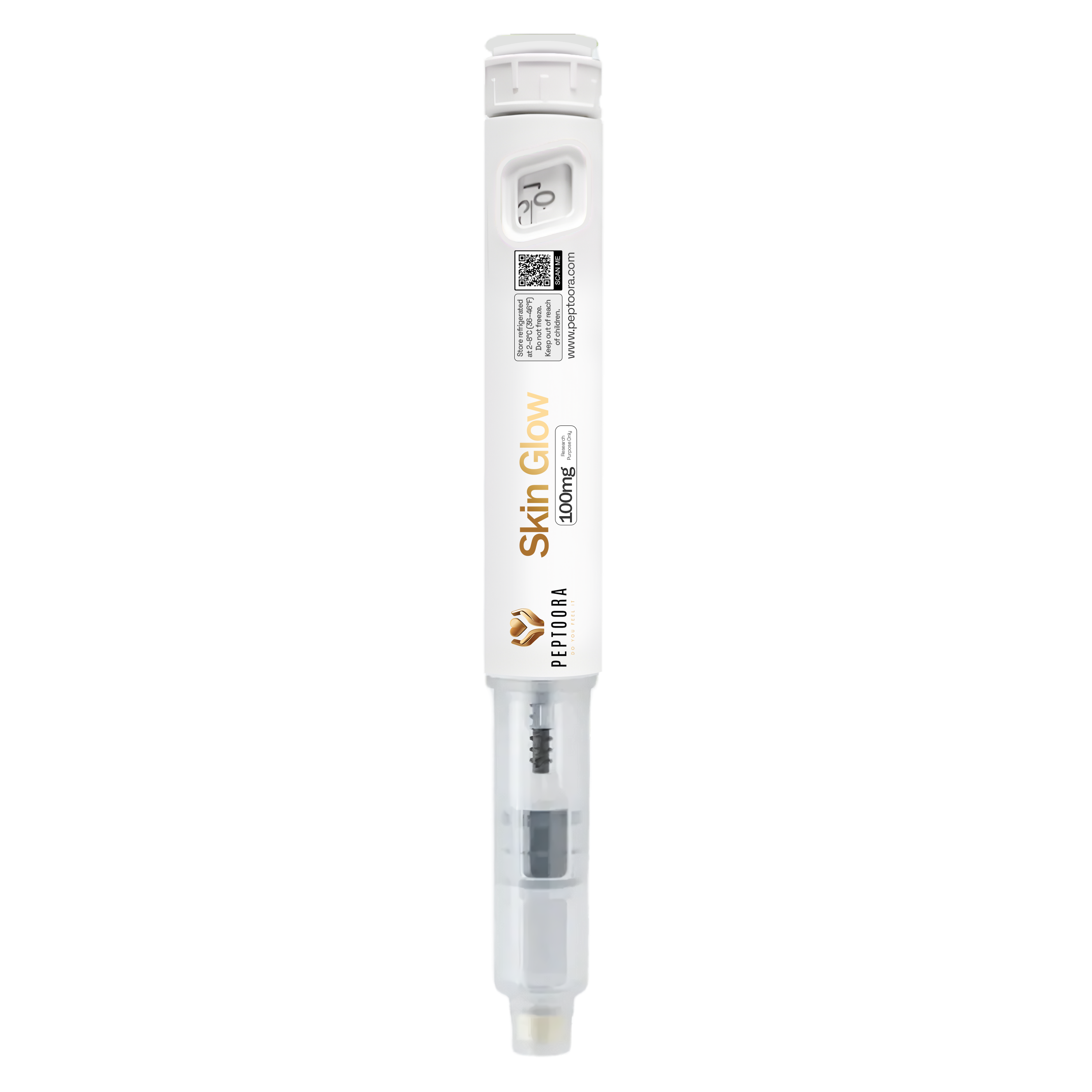
Skin Glow (GHK-cu) | Pen
GHK-Cu (Glycyl-L-Histidyl-L-Lysine Copper Complex) is a naturally occurring copper-binding tripeptide explored in regenerative and dermal-repair research for its relationship to extracellular matrix remodeling, antioxidant-defense context, and inflammatory balance markers. In experimental settings, it is frequently studied in wound-healing and skin-structure models where collagen organization, angiogenesis-related signaling, and tissue-repair kinetics are monitored.
Supports
- Dermal extracellular matrix remodeling frameworks linked to collagen and elastin synthesis markers.
- Wound-closure and re-epithelialization model endpoints associated with repair-cascade signaling.
- Antioxidant-defense context via copper-dependent redox enzyme activity markers in models.
- Inflammatory balance frameworks tracked through cytokine and stress-response readouts.
- Microcirculation and angiogenesis-related signaling context relevant to tissue remodeling studies.
Description
GHK-Cu is the copper complex of the tripeptide GHK (glycyl-L-histidyl-L-lysine). It is widely referenced in skin and tissue-repair research because copper binding can influence enzymatic and signaling processes relevant to extracellular matrix (ECM) turnover, collagen organization, and repair cascades. In controlled experimental systems, GHK-Cu is used to examine how dermal structure markers respond to changes in fibroblast activity, matrix metalloproteinase (MMP) signaling, and growth-factor context.
Across in vitro and preclinical studies, GHK-Cu is often discussed in relation to collagen and elastin-associated expression patterns, wound-closure kinetics, and antioxidant-defense readouts. Its copper-binding nature is also linked to redox-balance frameworks, where oxidative-load markers and antioxidant enzymes (e.g., superoxide dismutase context) are tracked alongside inflammation-related signals.
GHK-Cu is presented here for controlled research and educational context only. It is not marketed as an approved therapeutic product, and reported observations can vary substantially by model, endpoints, and study design.
Clinical Status
GHK-Cu has been evaluated across human, preclinical, and in vitro research contexts, particularly in dermatologic and wound-repair study designs. It is not presented here as an approved therapeutic product, and results should be interpreted within the constraints of each specific model and endpoint selection.
Evidence type:
Human RCT ✔ | Observational ✔ | Animal ✔ | In vitro ✔ | Regulatory approval ☐
Mechanism of Action
In experimental literature, GHK-Cu is frequently framed as a modulator of ECM remodeling context. Proposed mechanisms include shifts in fibroblast activity, collagen-related expression patterns, and MMP/TIMP balance signals that influence matrix turnover and tissue-structure outcomes. Some studies also report broad transcriptomic changes, positioning GHK-Cu as a regulator of repair-associated gene-expression signatures in model systems.
Because copper availability intersects with redox biology, GHK-Cu is also discussed in antioxidant-defense frameworks where oxidative-stress markers and copper-dependent enzyme activity readouts are monitored. Angiogenesis-related signaling context is sometimes tracked in parallel, particularly in wound models that assess perfusion and remodeling dynamics.
Benefits
-
Promotion of Collagen and Elastin Synthesis:
GHK-Cu is extensively studied for its ability to stimulate collagen and elastin production in skin fibroblasts. This effect improves dermal structure, elasticity, and firmness, contributing to more youthful and resilient tissue architecture. In research models, increased expression of extracellular matrix proteins has been observed, supporting its use in studies of wound healing and skin regeneration. -
Acceleration of Wound Healing:
GHK-Cu promotes faster wound closure and epithelial repair by stimulating keratinocyte migration, angiogenesis, and fibroblast proliferation. It also enhances the synthesis of glycosaminoglycans and decorin, key molecules for tissue matrix integrity. These effects make it a strong candidate in regenerative research involving burns, ulcers, and post-surgical recovery. -
Powerful Anti-Inflammatory and Antioxidant Actions:
Research shows that GHK-Cu reduces inflammatory cytokines such as IL-6 and TNF-α while enhancing antioxidant enzyme expression, including superoxide dismutase and catalase. This combination helps protect tissues from oxidative stress, cellular aging, and inflammatory degradation, contributing to overall cellular health and regeneration. -
Stimulation of Angiogenesis and Tissue Remodeling:
GHK-Cu has been observed to promote new capillary formation and improve oxygen and nutrient delivery to damaged tissue. This pro-angiogenic activity accelerates remodeling and supports long-term regeneration of skin, muscle, and connective tissue structures in experimental models. -
Activation of Stem Cell Pathways:
In vitro research suggests that GHK-Cu activates stem cell-related gene expression and supports progenitor cell differentiation in tissue repair processes. This gene modulation effect extends to pathways related to wound response, growth factors, and anti-fibrotic mechanisms, making it of growing interest in regenerative biology studies. -
Improvement of Skin Texture and Tone:
Clinical and preclinical data indicate that GHK-Cu can reduce fine lines, wrinkles, and skin roughness through enhanced collagen matrix formation and hydration. This peptide’s effect on dermal density and surface morphology positions it as a benchmark compound in cosmetic and dermatological research formulations. -
Regulation of Hair Growth and Follicle Health:
GHK-Cu has been observed to stimulate hair follicle activity and prolong the anagen (growth) phase. It improves blood supply and reduces follicular inflammation, supporting experimental models aimed at reversing hair thinning or promoting scalp regeneration. Its copper-binding capacity contributes to enzymatic balance critical for follicular metabolism. -
Protection Against Oxidative and Cellular Aging:
GHK-Cu exerts cytoprotective effects by chelating free copper ions and reducing oxidative damage to lipids, proteins, and DNA. These antioxidant properties are associated with enhanced mitochondrial function and longevity-related gene expression, supporting research into anti-aging and cellular resilience mechanisms. -
Anti-Fibrotic and Tissue Remodeling Properties:
Research has shown that GHK-Cu reduces fibrosis in liver, lung, and skin models by downregulating TGF-β1 and other pro-fibrotic genes. This promotes more balanced tissue remodeling and prevents excessive scar formation, contributing to smoother recovery and improved functional outcomes in regeneration research. -
Synergistic Effects in Regenerative Blends:
When combined with peptides such as BPC-157 or TB-500, GHK-Cu enhances tissue repair through complementary mechanisms—angiogenesis, fibroblast stimulation, and collagen synthesis. This synergy forms the basis of advanced regenerative research blends focused on recovery, skin health, and post-injury repair. -
Gene Expression Resetting and Cellular Rejuvenation:
Transcriptomic analyses reveal that GHK-Cu can revert gene expression profiles of aged cells to a more youthful state, affecting over 4,000 genes linked to cell growth, antioxidant defense, and repair. This profound genomic modulation underscores its growing significance in anti-aging, epigenetic, and longevity research models.
Research Data
| Study / Model | Reported effect |
| Human dermal fibroblast culture |
↑ Collagen and elastin synthesis; enhanced wound closure rate.
|
| In vivo wound model (rats) |
Accelerated epithelial repair and angiogenesis.
|
| Gene expression profiling (human skin) |
Activation of >400 regenerative genes, suppression of inflammatory markers.
|
| Hair follicle cell culture |
↑ Anagen phase duration; increased dermal papilla cell proliferation.
|
| UV-damaged skin model |
↓ oxidative stress and apoptosis; ↑ SOD and catalase activity.
|
| Topical and subQ administration (clinical) |
Improved elasticity, firmness, and wrinkle depth reduction.
|
| In vitro antioxidant assays |
Cu(II) chelation reduces reactive oxygen species (ROS).
|
Stack Suggestions
In extended experimental designs, GHK-Cu is sometimes paired with:
- BPC-157 + TB-500 → enhanced tissue regeneration and angiogenesis synergy.
- KPV peptide → amplified anti-inflammatory and epithelial protection.
- NAD+ or SS-31 → improved mitochondrial repair and oxidative resilience.
- Epithalon → supports long-term skin rejuvenation and DNA repair.
- Hyaluronic acid or glutathione → complements hydration and antioxidant balance.
Stacks discussed are for experimental design only, not safety/efficacy guidance.
Possible Side Effects
GHK-Cu has been generally well-tolerated in research and cosmetic studies.
Mild redness, itching, or warmth may occur at the injection site due to copper’s vascular effects.
High concentrations in topical form may cause temporary skin irritation or dryness.
No systemic toxicity has been reported in human or animal studies.
Side effects are dose-dependent and typically resolve quickly after application adjustment.
Scientific References
- Expression of glycosaminoglycans and small proteoglycans in wounds: modulation by the tripeptide-copper complex glycyl-L-histidyl-L-lysine-Cu2+ Animal
- The human tripeptide GHK-Cu in prevention of oxidative stress and inflammatory conditions Review
- Regenerative and protective actions of the GHK-Cu peptide in the light of the new gene data Review
- The potential of GHK as an anti-aging peptide Review
- GHK peptide as a natural modulator of multiple cellular pathways in skin regeneration Review
- Thermodynamically stable ionic liquid microemulsions pioneer pathways for topical delivery and peptide retention In vitro
- Exploring the beneficial effects of GHK-Cu on an experimental model of DSS-induced ulcerative colitis in mice Animal
- The human tri-peptide GHK and tissue remodeling Review
- The tripeptide-copper complex glycyl-L-histidyl-L-lysine-Cu2+ stimulates matrix metalloproteinase-2 expression by fibroblast cultures In vitro
-
In vivo stimulation of connective tissue accumulation by the tripeptide-copper complex glycyl-L-histidyl-L-lysine-Cu2+ in rat experimental wounds Animal
Cautions
- For educational and scientific context only; not intended to diagnose, treat, cure, or prevent any disease.
- If you are pregnant, nursing, have a medical condition, or use prescription medication, consult a qualified professional.
- Discontinue use if sensitivity occurs.
Pairs well with
In stock! Ships within 2-6 business days.
Complimentary shipping & returns
Skin Glow (GHK-cu) | Pen
FAQs
Please read our FAQs page to find out more.
Do I need a prescription to place an order?
No prescription is required to place an order. We recommend professional consultation before using any product where applicable.
Are the pens ready to use?
Our systems are designed for convenience and consistency. Product-specific handling and storage guidance is provided with each order.
Are these products intended to diagnose, treat, cure, or prevent disease?
No. Products are not intended to diagnose, treat, cure, or prevent any disease.
When will my order be shipped?
Orders are typically dispatched within 2–4 business days, subject to product availability and verification. Once shipped, delivery time depends on your destination and carrier.
How should I store products after delivery?
Store products according to the label and included guidance. Some products may require refrigeration after opening. Improper storage can impact product integrity.